
Just another grass eating leopard
Leopard behaviour and keeping an open mind

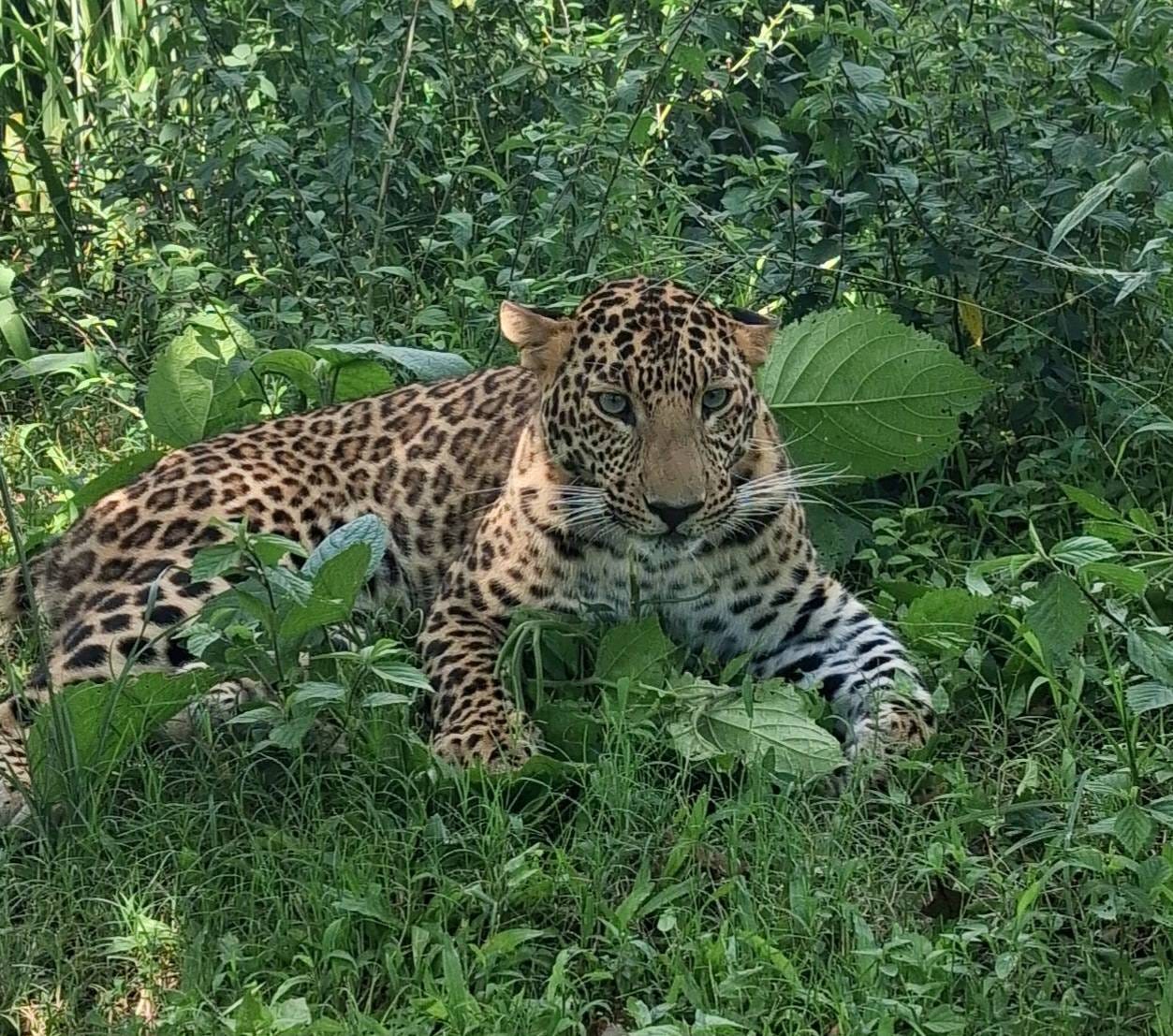
The leopard in the image above is Leo. The video below shows Leo eating grass.
Yes, leopards eat grass. Big cats eat vegetation, in fact they eat all sorts of non-meat provisions from nature.
Why?
It’s all about settling their stomachs, clearing out the indigestible stuff such as fur and bone and even inducing vomit to relieve gastrointestinal discomfort. Leopards are strict carnivores so they use grass as a natural way to purge their systems - that’s because as carnivores (as against us, omnivores), big cats lack the enzymes needed to digest cellulose so their digestive systems need help. Eating grass does that.
So in short, and believe me, there’s a lot of science to digest (another amazing pun, Jack, you’re on fire) but grass as a digestive aid, it helps control parasites and hairballs and relieves indigestion if slightly unfresh meat is consumed. Leopards are actually finicky in that respect, rarely not eating fresh meat as against rotting carcasses.
When I lived with the leopard Asa, I was amazed what he would eat during our jungle forays. As I’ve written before, the young leopard became the teacher. I observed that he would suck on leaves for hydration and he was selective as to what grasses and leaves he would actually eat. This isn’t about calorie intake, it’s about functional health benefits. Big cat evolution has meant these incredible animals have developed an innate understanding of the nutrients needed and what is available. When we humans reduce those options through habitat destruction we are affecting the health and behaviour of big cats in yet another way.
At high altitudes, snow leopards consume remarkably high amounts of vegetation compared to other big cats, sometimes making up a measurable percentage of their stomach contents. They target mainly alpine grasses but will also consume different types of shrubs. Tigers eat vegetation so it wraps around the sharp bone fragments and fur in their stomachs, allowing them to safely vomit the hazardous material. Being so highly grooming-centric, tigers ingest large amounts of their own fur, grass consumption - the right grasses - deals with that issue. Different grasses are used by lions, jaguars and cheetahs too. Again, our impact when we alter habitat vegetation types is that of changing the web of life in many different ways.
So Leo is just another grass eating leopard. I sat with him for about an hour yesterday. It was a quiet time for both of us. I asked politely when visitors to the rescue center were too loud oustide Leo’s enclosure that they please be quiet, we’ve got signs up, they are usually ignored. At zoos and rescue centers in several countries I’ve witnessed too much noise around captive wild animals. You can see in the next video that Leo exhibits the typical aggressive play of young big cats, I didn’t say a word when he did this.
Leo’s behaviour, his grass eating included, is obviously affected by the fact that he is captive but I see plenty of wild instincts when I am with him. I’m motivated by his captivity in that I want to see as few leopards in the future end up with the same fate. Prevention - that word again. I’m back at the rescue center tomorrow to do more work as we prepare an enclosure that is completely isolated for any leopard needing rehabilitation in the future. Rehab and release, that’s the mandate. Leo will never live wild again, I’ve touched on this before, I will write more in the future, circumstances conspired against him. It’s now about him having the best life possible and being an important ambassador for his species so people can learn.
I remember being bemused in the jungle when Asa would start feasting on buffalo shit. When I questioned him about this, he would look at me blankly, frustrating as I was giving this leopard daily English lessons. There is a chance the look he was giving me was actually more of “you wouldn’t understand you big stupid bastard” as there were many times I’m sure he thought this. I usually tried to vacate the area quickly when Asa started on a pile of buffalo dung as I knew the next attack the young leopard put on me could mean an uncomfortable encounter with a strong manure smell. More than once I wondered what I was doing living in the jungle with a shit eating leopard.
Then Asa would start on the grass again and everything would be ok. I was grateful for that. He particularly seemed to like a combination of rhododendron bark and leaves. This meant our hunting training trips were always worthwhile even if Asa didn’t make a kill.
I thought about this yesterday as I sat with Leo. The different lives of a leopard living in captivity and a leopard living free. Sometimes Leo is moved into a temporary enclosure so the grass in his main one is cut meaning people can see him more easily. It’s always about us, I wish it wasn’t. As you can see in the video there’s a good amount of high grass there now, Leo can hide if he wants to. Freedom in one small way.
I have other stories connected to the grass (and other stuff) eating of leopards, they will come. An anthropologist friend wrote to me yesterday that she had been reading Blood of the Leopard but she had thought it was going to be a book. So to stop confusion, yes, the book isn’t far away now and yes again, it may have the same name but it will be very much my personal take on all that has happened.
And a lot has happened. Still is happening.
As you can see, Leo is a magnificent creation of nature. It makes me sad he can’t live free. It makes me sad about what is happening to too many leopards in too many places. As always, it’s about protecting what we can now. I thank those who understand, care about and support that. We have to keep an open mind about the whole situation, that’s important, the human and leopard relationship has become incredibly complex.
For all that though, the right thing needs to be done for these big cats, we just need more people to truly grasp that. I’m going to leave you now with one very sobering thought. Look at the image at the top again, Leo’s ears have flattened, what we call airplane ears when a big cat does this. It is a signal of different emotions and feelings, stress, wariness and can also be a precursor to an impending attack. Leo did this while some people walked past his enclosure, that’s why I took the photo.
More to come on big cat stress - they’re up against it, life is far from just tranquil grass eating.
Also, how old is Leo? How old was Asa? Thanks for your commitment and service.
Amazing that you and others can be so close—in support of Leo and other magnificent big cats! (His ears did not seem to flatten when he snarled or growled toward you, did they?)